Choosing between a 60W, 75W, and 100W equivalent LED bulb sounds simple—until you realize the “watts” on the box aren’t the real story. With LED lighting, what matters most is lumens (brightness), then color temperature (Kelvin), and finally beam angle and fixture type.
This guide is written from a practical, “what actually works in real rooms” point of view—no product links, no hype—just experience-based advice you can use to buy the right LED bulb the first time.
Quick Answer: Which One Should You Buy?
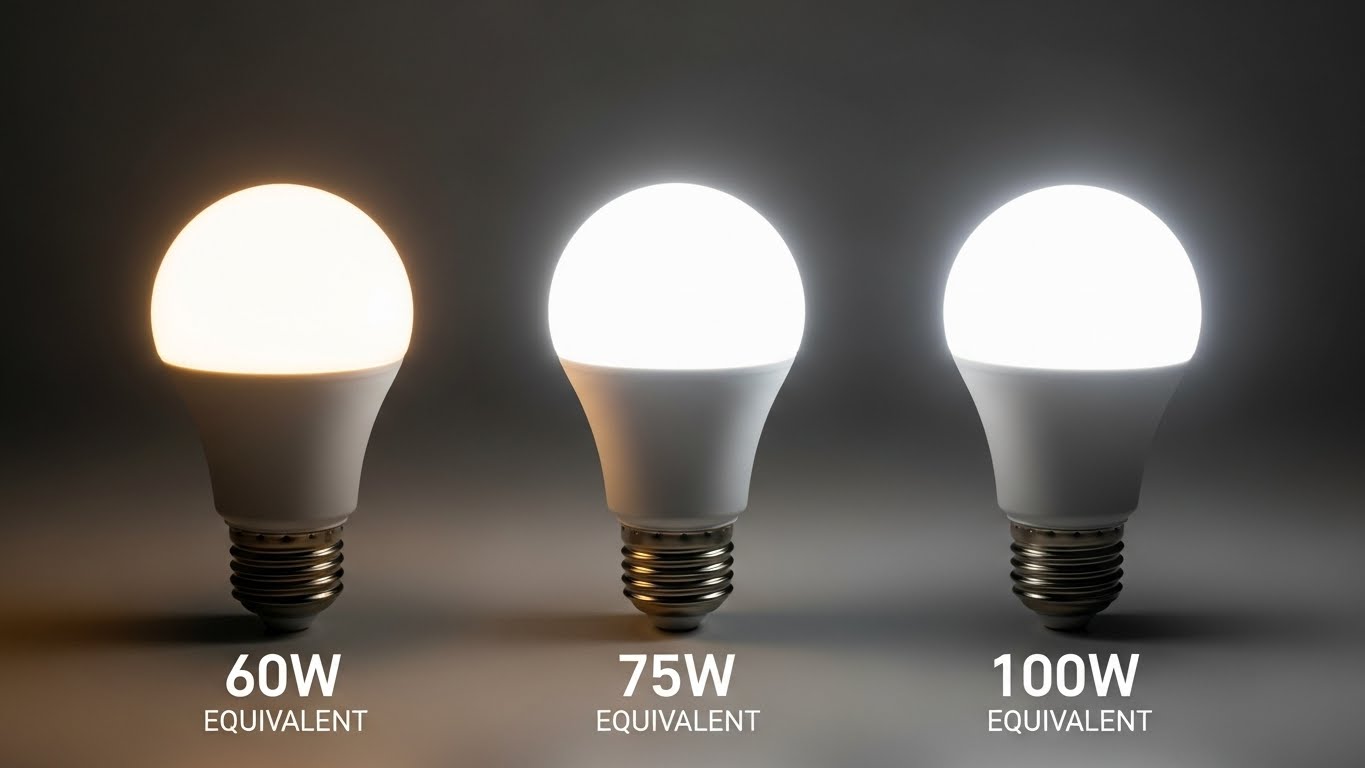
- 60W equivalent (800–900 lumens): Best for bedrooms, small lamps, hallways, and cozy lighting.
- 75W equivalent (1,050–1,200 lumens): Best “middle ground” for kitchens, living rooms, and most ceiling fixtures.
- 100W equivalent (1,500–1,700 lumens): Best for task-heavy areas like kitchen work zones, garages, workshops, or rooms with high ceilings.
If you’re unsure: 75W equivalent is the safest starting point for most rooms.
The Truth About “Equivalent” Bulbs: Real Lumens Matter
Incandescent bulbs were measured by watts because watts were directly tied to brightness. LEDs use far less electricity, so brands say “equivalent” to help shoppers compare.
Here are the ranges you’ll most commonly see:
| Incandescent “Equivalent” | Typical LED Lumens | Typical LED Watts (Approx.) |
|---|---|---|
| 60W | 800–900 lm | 8–10W |
| 75W | 1,050–1,200 lm | 10–13W |
| 100W | 1,500–1,700 lm | 14–20W |
What to do in-store or online: Ignore “equivalent” first and check lumens. If the lumens aren’t clearly listed, I personally treat that as a red flag.
Room Size Guide: How Many Lumens Do You Actually Need?
A simple way to estimate brightness is lumens per square foot:
- Ambient lighting (general): 10–20 lm/ft²
- Task lighting (cooking, shaving, desk work): 30–50 lm/ft²
- Workshop/garage: 50+ lm/ft²
Lumens by room size (quick table)
| Room Size | Ambient Target Lumens (10–20 lm/ft²) | Task Target Lumens (30–50 lm/ft²) |
|---|---|---|
| 50 ft² (small hall/bath) | 500–1,000 | 1,500–2,500 |
| 100 ft² (small bedroom) | 1,000–2,000 | 3,000–5,000 |
| 150 ft² (bedroom/office) | 1,500–3,000 | 4,500–7,500 |
| 200 ft² (living room) | 2,000–4,000 | 6,000–10,000 |
Convert that into bulbs (easy examples)
- A 60W equiv bulb (~850 lm)
- Good for: ~40–80 ft² ambient (depending on how bright you like it)
- A 75W equiv bulb (~1,100 lm)
- Good for: ~55–110 ft² ambient
- A 100W equiv bulb (~1,600 lm)
- Good for: ~80–160 ft² ambient, or smaller rooms needing strong task light
Real-life tip: Most rooms feel better with multiple medium-bright bulbs than one super-bright bulb. Brightness spreads more evenly and reduces harsh shadows.
60W Equivalent LED Bulbs: Best Uses (and when they disappoint)
Where 60W equivalent shines
- Bedroom nightstands
- Table/floor lamps
- Hallways
- Accent lighting
- Kids’ rooms (so it doesn’t feel like a dentist office)
When 60W feels too dim
- Kitchens with dark cabinets/counters
- Living rooms with high ceilings
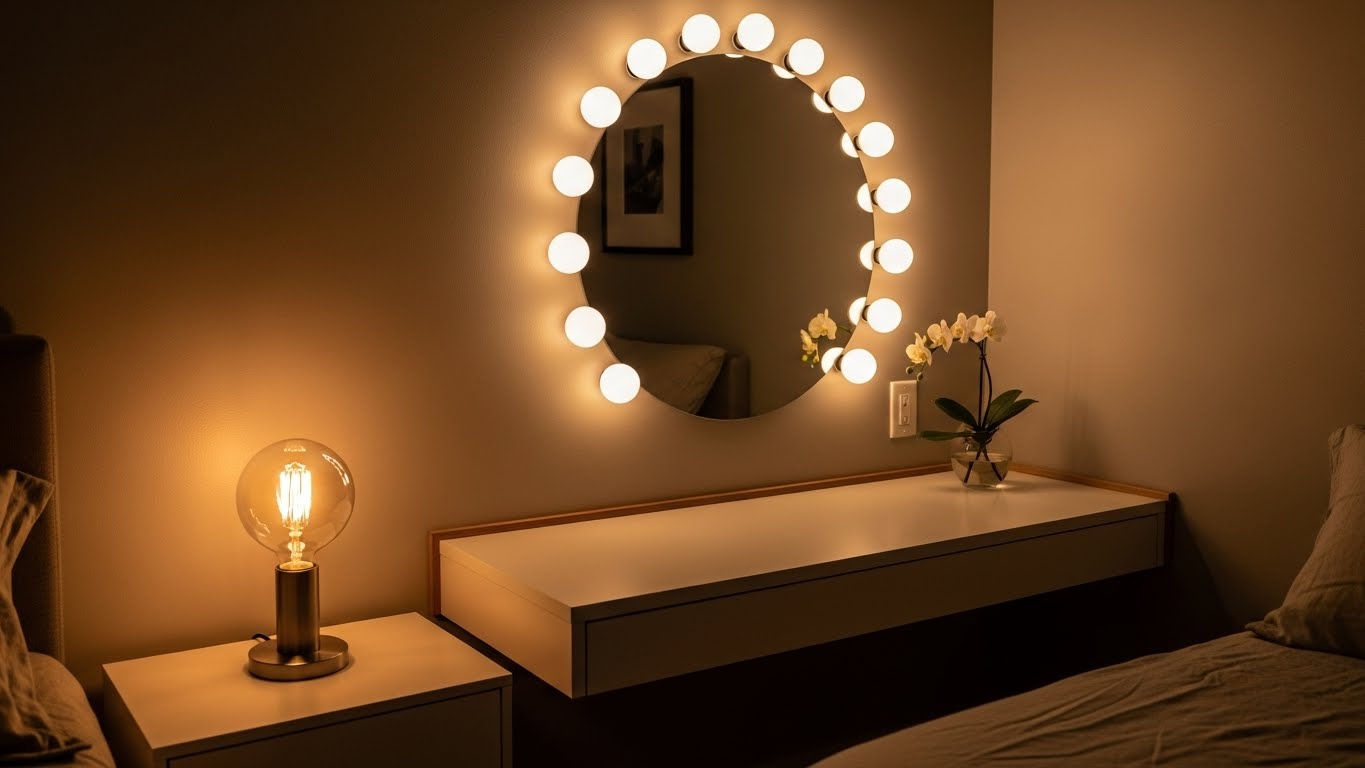
- Bathrooms (especially mirror lighting)
- Any place you do detailed work
My experience: 60W equivalent works great in lamps with shades because the shade helps diffuse light. In open fixtures or ceiling mounts, it can feel underpowered unless you use multiple bulbs.
75W Equivalent LED Bulbs: The “Most People Will Be Happy” Choice
Why 75W equivalent is the sweet spot
- Brighter than 60W without being harsh
- Great for “main room” lighting
- Works well in most ceiling fixtures
Best places for 75W equivalent
- Living rooms
- Bedrooms (main overhead light)
- Kitchens (general lighting)
- Home offices (paired with a desk lamp)
Real-world note: If you’ve ever swapped to LED and thought “why is my room darker now?”, it’s usually because you picked 60W equivalent where you previously had 75W/100W incandescent—or had multiple bulbs doing the work.
100W Equivalent LED Bulbs: Powerful, but Easy to Overdo
Where 100W equivalent is perfect
- Kitchen task zones (over counters/islands)
- Garages/workshops
- Laundry rooms
- Basements
- Rooms with high ceilings
- Fixtures with dark shades or tinted covers (they eat light)
Where 100W can be too much
- Small bedrooms
- Cozy living rooms with warm décor
- Any bare-bulb fixture at eye level
My experience: A 100W equivalent in the wrong fixture can feel glaring, especially with cool white or daylight color temperatures. If you want that brightness but not the harshness, choose a warmer Kelvin and/or a diffused (“frosted”) bulb.
Don’t Ignore This: Color Temperature (Kelvin) Changes Everything
Brightness is only half the story. The same lumens can feel “soft” or “clinical” depending on Kelvin.
Common Kelvin options:
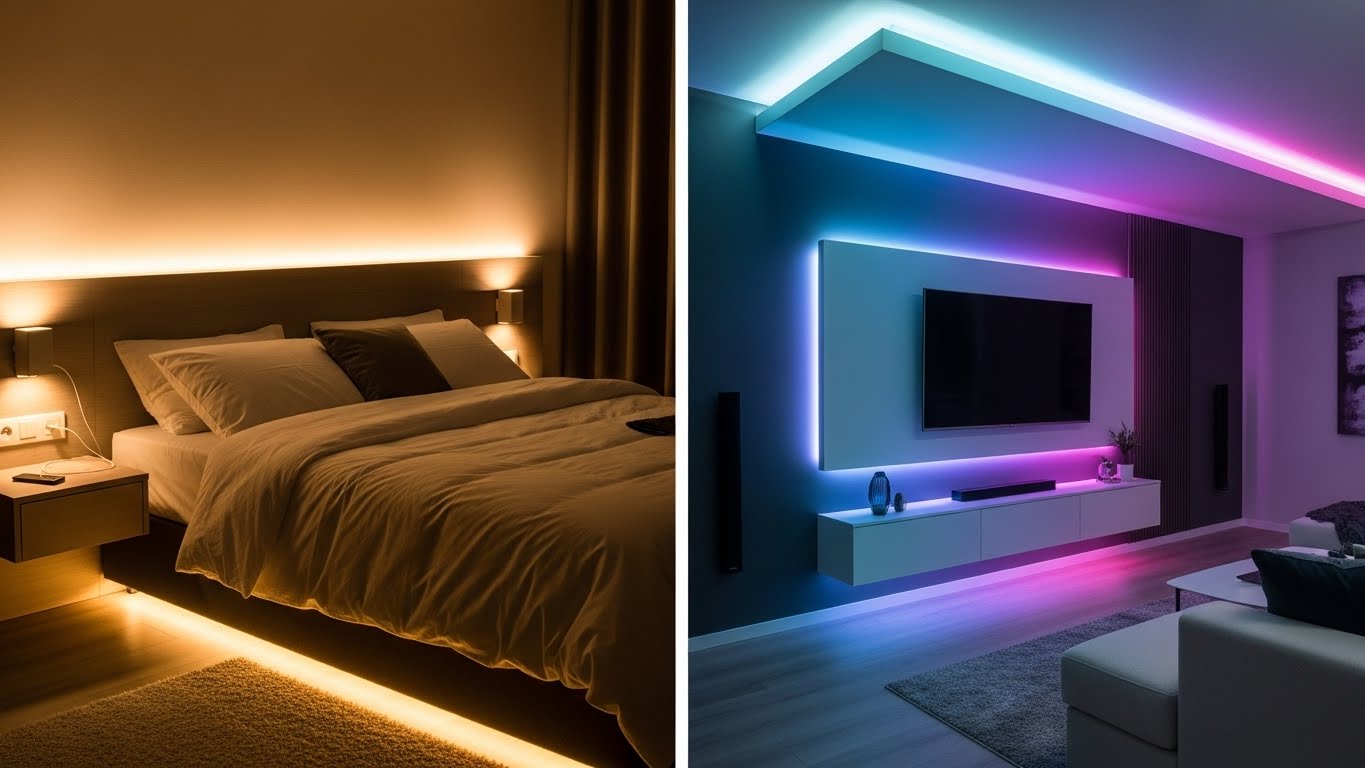
- 2700K (Soft White): Warm, cozy, relaxing
Best for bedrooms, living rooms - 3000K (Warm White): Slightly brighter/cleaner warm
Great for whole-home consistency - 4000K (Cool White): Crisp, modern, more contrast
Good for kitchens, bathrooms, offices - 5000K (Daylight): Very bright/blue-ish, task-heavy
Good for garages, workshops, or very bright kitchens
Practical rule I use:
- If the room feels “too harsh,” don’t immediately lower lumens—try warmer Kelvin first.
Beam Angle + Fixture Type: Why Two “Same Lumens” Bulbs Feel Different
Two bulbs with the same lumens can look different because of beam angle and bulb shape.
- Wide beam (more spread): Better for general lighting
- Narrow beam (more focused): Better for accent or spot lighting
Also:
- Clear bulbs can create glare and sharp shadows
- Frosted/diffused bulbs feel softer and more comfortable
- Enclosed fixtures trap heat—use bulbs rated for enclosed fixtures if needed
- Recessed cans often work better with BR30/BR40 style bulbs than A19
Dimmable vs Non-Dimmable: Don’t Pay Extra Unless You Need It
If you have a dimmer switch, you’ll want:
- Dimmable bulb
- Ideally “dimmer compatible” to reduce flicker
If you don’t have a dimmer:
- Non-dimmable is fine
- Paying extra doesn’t improve brightness or lifespan in a noticeable way
Experience tip: Flicker complaints usually come from dimmer + bulb mismatch, not from LEDs in general.
A Simple Buying Checklist (Works Every Time)
Before you buy, check:
- Lumens (not just “equivalent”)
- Kelvin (2700K vs 3000K vs 4000K vs 5000K)
- Bulb shape (A19 vs BR30/BR40 for recessed cans)
- Fixture type (enclosed? open? shaded?)
- Dimmable (only if you have a dimmer)
- CRI (Color Rendering Index)
- Look for CRI 80+ (good) or 90+ (excellent for kitchens/makeup/art)
Real Room Recommendations (Practical Picks)
Bedroom (cozy)
- 60W equivalent, 2700K (lamps)
- 75W equivalent, 2700K–3000K (overhead, if needed)
Living room (comfortable but not dim)
- 75W equivalent, 2700K–3000K
- Use multiple bulbs for even lighting
Kitchen (clean + functional)
- 75W equivalent for general ceiling lighting
- 100W equivalent for task areas, 3000K–4000K
Bathroom (mirror clarity)
- Often better with multiple bulbs around the mirror
- 75W–100W equivalent depending on fixture count
- 3000K–4000K, CRI 90+ if possible
Garage/workshop
- 100W equivalent or higher
- 4000K–5000K depending on preference
Final Recommendation
- Choose 60W equivalent if you want soft, relaxing lighting and you use lamps/shades.
- Choose 75W equivalent if you want the best all-around brightness for most rooms.
- Choose 100W equivalent if you need serious brightness for tasks, high ceilings, or utility areas.
If you want one “safe” choice: 75W equivalent around 1,100 lumens, then adjust Kelvin based on the room.