If you’re upgrading your home lighting, the choice usually comes down to this:
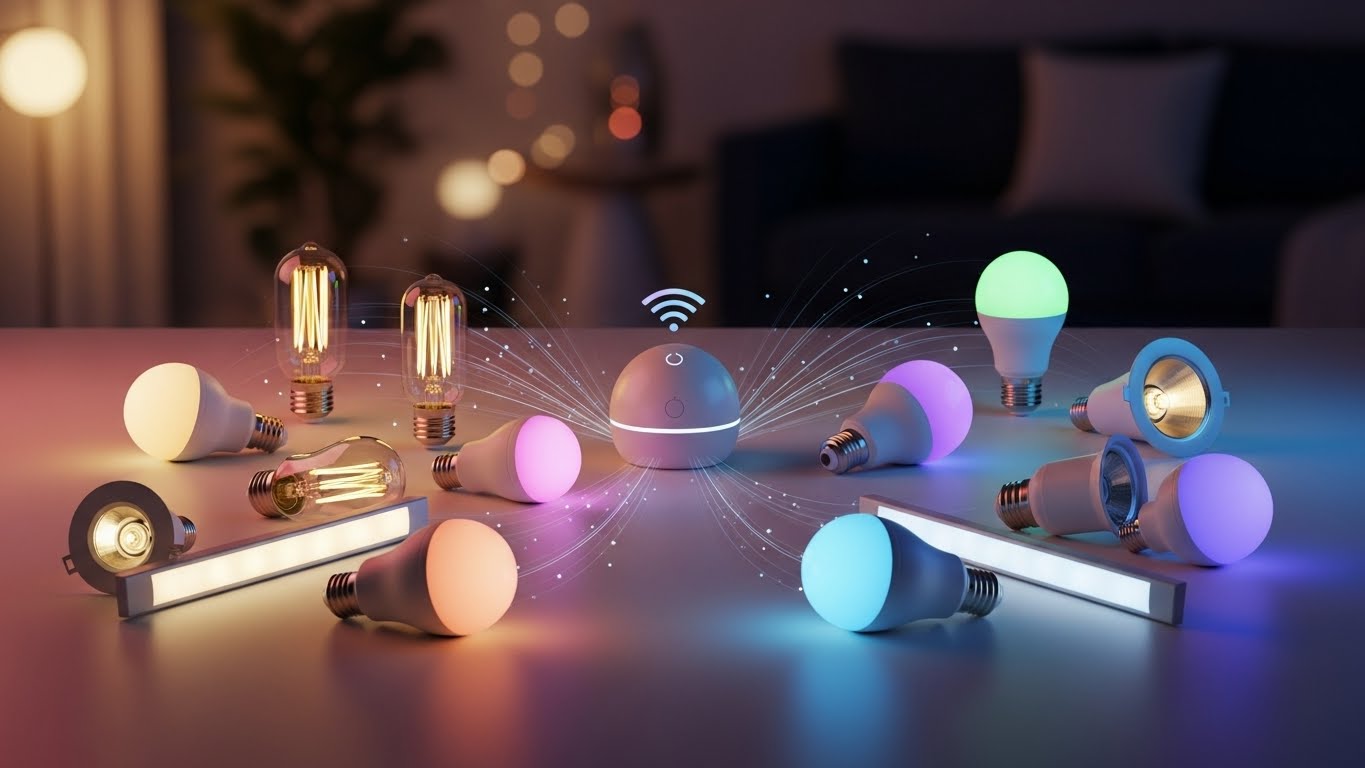
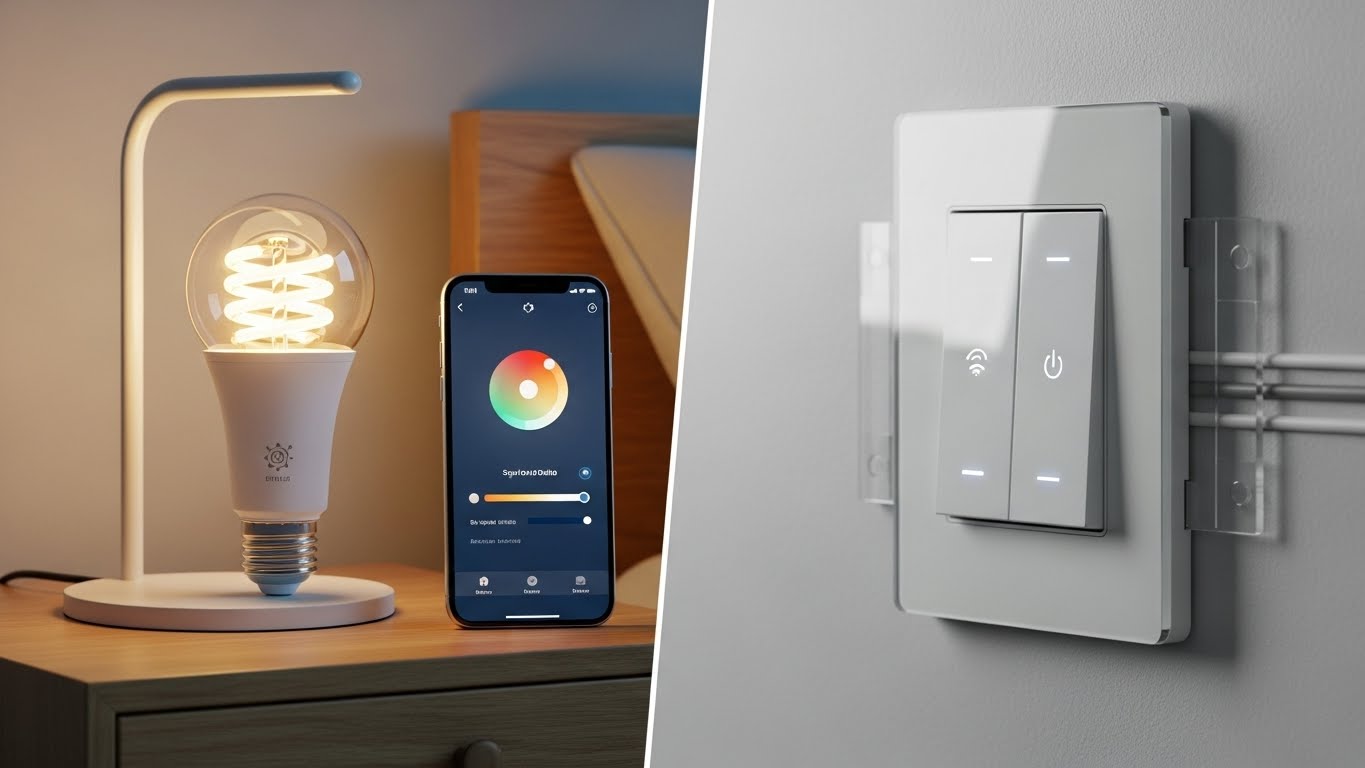
- Smart bulbs = you control the bulb (color, dimming, scenes)
- Smart switches = you control the power to the fixture (works with regular bulbs)
Both are useful—but they shine in different rooms and budgets. Here’s a clear, real-world breakdown so you don’t waste money or end up with a setup that’s annoying to use.
Quick Answer (Most Homes)
- Choose a smart bulb if you want color, scenes, and mood lighting (bedrooms, living rooms, gaming rooms).
- Choose a smart switch if you want simple, reliable control for an entire room (kitchen, hallway, bathroom, garage).
If you only remember one rule:
Smart bulbs are best for “ambience.” Smart switches are best for “the whole room.”
Cost Comparison (Real-World, Not Just the Sticker Price)
Smart Bulb Cost
You pay per bulb.
- Great when a room has 1–2 bulbs (lamp, single ceiling light)
- Gets expensive fast for fixtures with 4–10 bulbs (chandeliers, recessed lights)
Example:
- Bedroom lamp (2 bulbs) → smart bulbs make sense
- Kitchen recessed cans (8 bulbs) → smart bulbs get pricey
Smart Switch Cost
You pay per switch, and it controls the whole fixture/room.
- Often cheaper when the room has many bulbs
- You can use regular LED bulbs (cheap to replace)
Example:
- One switch controlling 8 recessed lights → one smart switch is usually the better deal
Bottom line on cost:
- 1–3 bulbs on a circuit: smart bulbs often win
- 4+ bulbs on a circuit: smart switch often wins
Convenience Comparison (Daily Use Matters)
Smart Bulbs: Pros & Cons
✅ Pros
- Color changing + scenes (best feature)
- Easy to install (screw in, pair, done)
- Control each bulb individually (great for lamps)
❌ Cons
- Wall switch problem: if someone flips the wall switch OFF, the bulb goes offline
- You usually want to leave the switch ON and control via app/voice
- Some setups can feel messy if you mix brands/apps
Best for: people who love mood lighting and don’t mind app/voice control.
Smart Switches: Pros & Cons
✅ Pros
- Works like normal—wall control stays intuitive
- Very reliable for daily lighting routines
- Great for guests and family (no “don’t touch that switch” rules)
- Controls all lights on that circuit together
❌ Cons
- No color control (unless you pair with smart bulbs, which defeats the point)
- Installation can be harder (wiring, neutral wire, safety)
- If you rent, you might not want to swap switches
Best for: families, shared homes, and “set it and forget it” lighting.
Best Rooms for Smart Bulbs
Smart bulbs make the most sense where you want mood and flexibility:
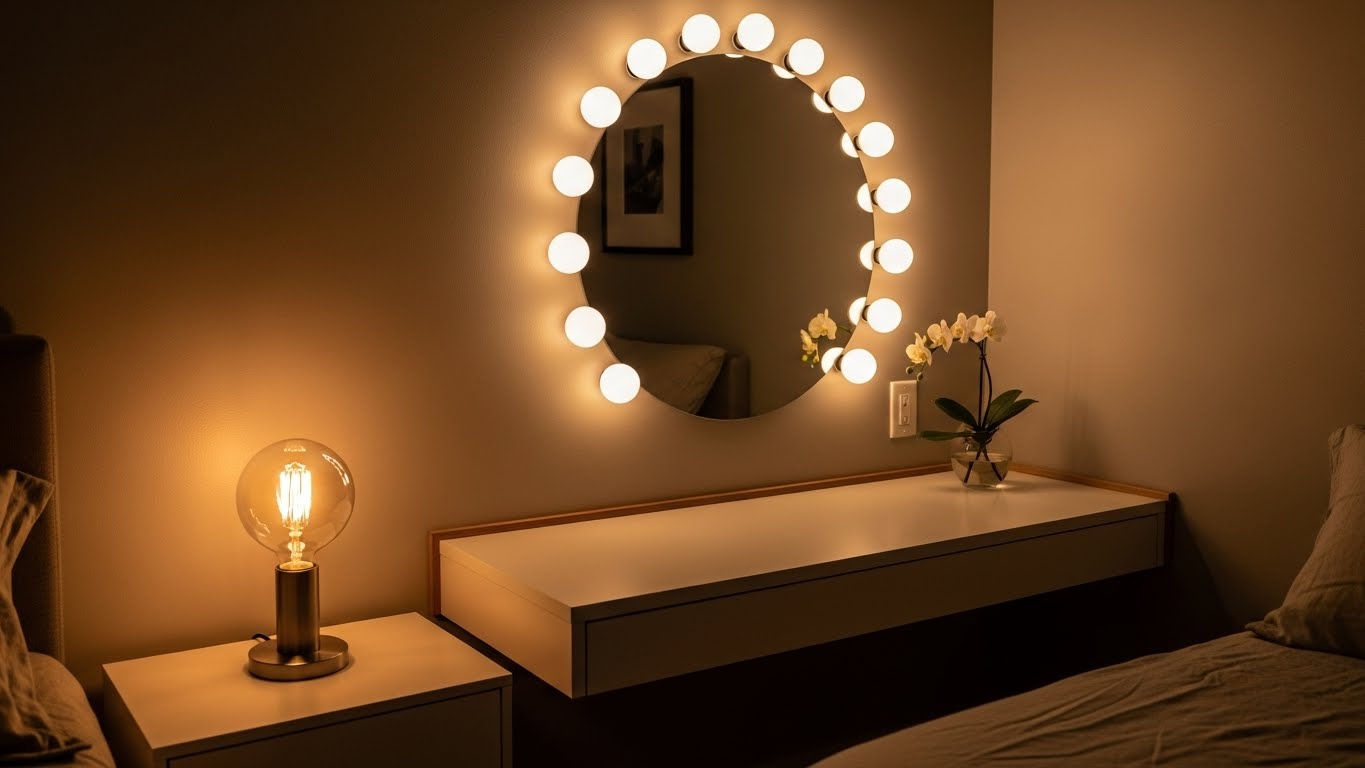
Bedroom
- Warm wind-down scenes
- Low brightness for night
- Soft colors (amber, red, warm white)
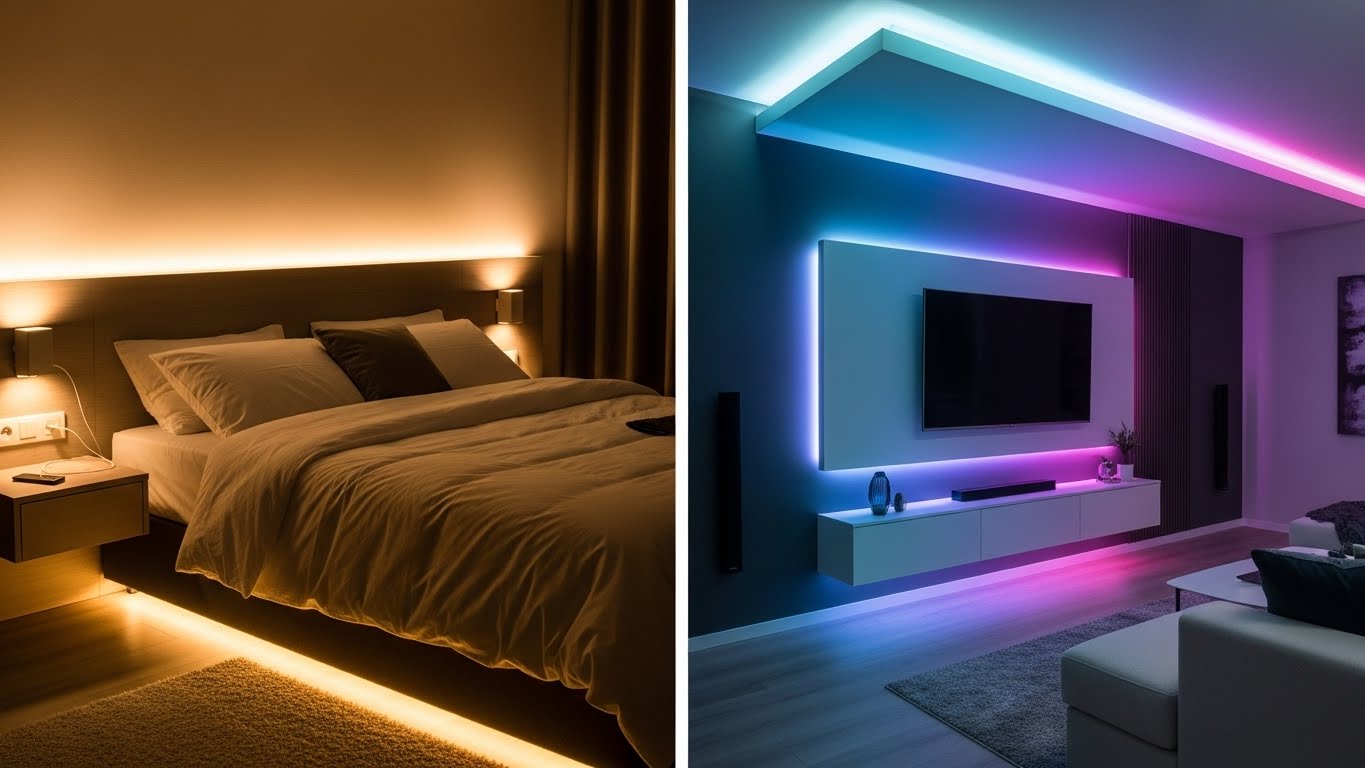
Living Room
- Movie mode
- Ambient lighting behind TV
- Party scenes or relaxing warm tones
Nursery / Kids’ Rooms
- Night light colors
- Low-brightness routines
- Gentle wake-up lighting
Desk / Gaming Setup
- Accent colors and scenes
- Reactive “vibe” lighting (optional)
Smart bulb rule: if the room is about comfort and ambience, choose smart bulbs.
Best Rooms for Smart Switches
Smart switches make the most sense where you want simple and reliable:
Kitchen
- Bright task lighting
- Multiple bulbs/recessed cans
- Everyone needs easy control
Hallways / Stairways
- Motion schedules and timers
- Safety lighting
- Simple on/off
Bathroom
- Reliable daily use
- Night schedule (dim at night)
- Guests won’t get confused
Garage / Laundry Room / Utility Areas
- Pure function
- Often many bulbs or overhead fixtures
- Better value per room
Smart switch rule: if the room is mostly “function lighting,” switches usually win.
The Hybrid Setup (Best of Both)
A lot of people end up with this because it’s the most practical:
- Smart switches for kitchen/hallways/bathrooms
- Smart bulbs for bedrooms/living rooms/lamps
You can also mix within one room:
- Smart switch for the main overhead light
- Smart bulbs for lamps and accent lighting
That way you get:
- Normal wall control for the main light
- Color scenes where you actually enjoy them
Decision Checklist (Pick in 30 Seconds)
Choose SMART BULBS if you want:
- Color-changing scenes
- Individual bulb control
- Bedroom/living room vibes
- Easy install (no wiring)
Choose SMART SWITCHES if you want:
- Everyone can use the wall switch normally
- Lower cost for rooms with many bulbs
- Reliable “whole-room” control
- Kitchen/bathroom/hallway function lighting
Final Verdict (The Optimal Choice)
If you want the best experience without frustration:
✅ Use smart switches in high-traffic functional rooms (kitchen, hallway, bathroom)
✅ Use smart bulbs in comfort/ambience rooms (bedroom, living room, lamps)
That setup gives you the best combo of cost + convenience + real-life usability.